
- Food Service and Seafood Wholesale Specialists
- Client Login
- 61 8 9434 1200

Running a restaurant without the right ingredients in storage can quickly turn a busy service into a problem. Effective restaurant food inventory management helps kitchens maintain menu consistency, control waste, and avoid last-minute purchasing. The key is knowing which products should always be available and how much stock the business actually needs.
There is no universal quantity that every restaurant should hold. The right restaurant food stock level depends on menu design, customer demand, storage capacity, product shelf life, and supplier delivery schedules. However, most commercial kitchens benefit from maintaining reliable stocks of core seafood, frozen, chilled and pantry products.
Restaurants should always keep enough essential ingredients to support their core menu between scheduled deliveries. High-use, difficult-to-substitute and long-lead-time products generally deserve the closest attention.
For restaurants where seafood is a core menu category, fish should form part of the planned stock rather than being ordered only when supplies become low.
Different menus require different fish varieties, but common commercial requirements can include fillets, whole fish, crumbed products and other ready-to-cook formats.
The right stock level depends on weekly usage and expected bookings. Restaurants should consider both their most popular dishes and suitable alternatives when planning seafood purchases.
Weststate Seafoods supplies restaurants and hospitality businesses across Western Australia with fresh and frozen seafood, providing access to a broad range of seafood products for commercial kitchens.
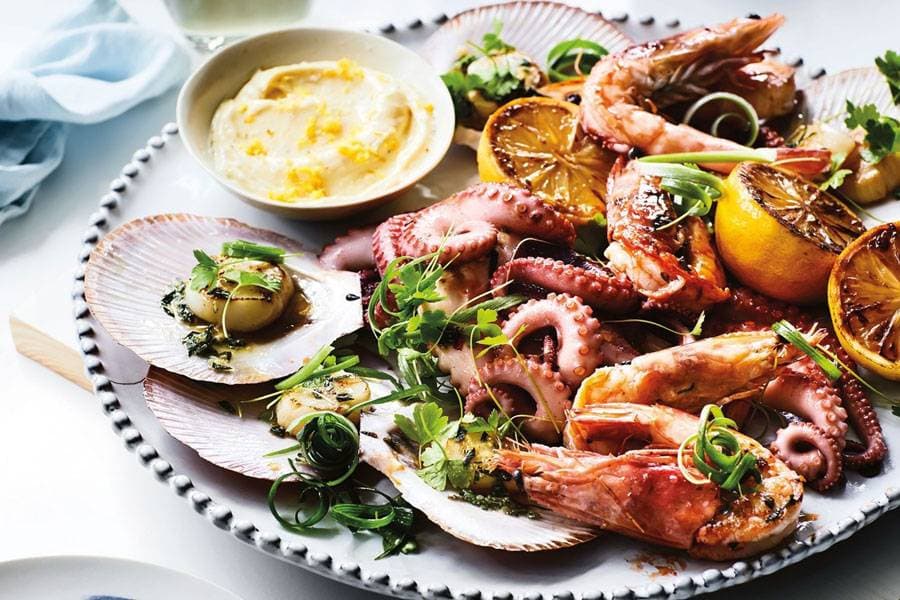
Prawns, squid, octopus and other shellfish are frequently used across restaurant menus, from starters and salads to pasta, curries and main courses.
Restaurants should monitor these products according to actual usage rather than simply maintaining a fixed quantity. Products with high turnover may require more frequent replenishment, while slower-moving shellfish should be ordered carefully to minimise waste.
Maintaining suitable seafood options in both fresh and frozen formats can also give kitchens greater flexibility when demand or product availability changes.
Frozen products are valuable for restaurants because they can provide longer storage periods and help kitchens maintain essential ingredients between deliveries.
A practical frozen inventory may include:
Weststate’s food-service range extends beyond seafood into frozen products, helping businesses consolidate more of their restaurant food supply requirements with one supplier.
Chilled ingredients such as dairy products, sauces, prepared foods, and other short-life items need closer monitoring because their usable storage period is limited.
Restaurants should use stock rotation methods such as first in, first out (FIFO) so older products are used before newer deliveries. This reduces the likelihood of products expiring unnoticed.
Good restaurant inventory management means knowing what is available, what is being consumed, and when each product needs replenishing.
Not every ingredient needs to be checked at the same frequency. Focus daily or frequent checks on products that are expensive, highly perishable or essential to popular menu items. A seafood restaurant, for example, may monitor high-volume fish and prawn products more closely than slow-moving pantry ingredients.
A reorder level is the stock quantity at which a new order should be placed. For example, if a restaurant normally uses 10 kg of a particular product each week and delivery requires several days, waiting until only 1 kg remains creates unnecessary shortage risk.
Reorder points should account for average usage, supplier lead time, storage capacity and expected demand.
Stock levels should reflect how long products can be safely stored and the conditions required to maintain quality.
Restaurants should pay particular attention to:
Ordering large quantities simply because a product has a lower unit price can become expensive if the product is ultimately wasted.
Historical usage is useful, but it should not be the only factor guiding purchasing. Increase planned stock for busy periods, functions, public holidays and menu promotions. Conversely, reduce orders during predictable quieter periods.
A practical inventory system should make ordering decisions quick and repeatable.
Create a master list containing:
Group products into seafood, frozen, chilled, pantry, and other categories. This makes stock checks faster and helps staff identify shortages before placing an order.
A system can be managed through inventory software, a spreadsheet, or a simple checklist. Consistency is more important than the technology used.
Reliable supply is essential because even an accurate inventory system cannot prevent problems if products repeatedly arrive late or are unavailable.
Restaurants should assess suppliers based on product quality, range, delivery reliability, communication, and their ability to support changing demand.
Weststate Seafoods has supplied Perth and Western Australian hospitality businesses since 1988. Its offering extends from seafood to broader catering products, supporting restaurant and café requirements through one food-service range.
For restaurants, working with a dependable supplier can simplify procurement while improving visibility over essential ingredients. It also makes it easier to maintain appropriate stock levels without constantly searching for alternative suppliers.
Knowing what restaurants should keep in stock is only the first step. Effective restaurant food inventory management requires the right balance between availability, demand, storage capacity, shelf life, and supplier reliability.
Restaurants that monitor high-use products, set sensible reorder points and adjust purchasing to expected demand can reduce shortages without unnecessarily tying up money in excess stock.
For Perth and Western Australian hospitality businesses, partnering with a supplier that can support both seafood and broader food-service requirements can make procurement more straightforward. Weststate Seafoods combines seafood expertise with a wider catering range, helping restaurants maintain a practical and dependable restaurant food stock system.
Restaurants manage food inventory by tracking stock levels, monitoring usage, setting reorder points, rotating products and adjusting orders according to expected demand.
A restaurant should keep enough stock to cover expected usage until the next delivery, with an appropriate safety buffer for essential products. The exact quantity depends on demand, shelf life and supplier lead time.
Restaurants can prevent seafood shortages by monitoring high-use products, establishing reorder points, reviewing upcoming bookings and working with suppliers that offer reliable availability across multiple seafood categories.
High-use and highly perishable products may need daily checks, while slower-moving items can be reviewed less frequently. Many restaurants benefit from a detailed weekly stocktake combined with routine checks of critical ingredients.
Yes. Weststate Seafoods supplies a broader range of food-service products alongside seafood, including frozen foods and pantry essentials such as oils, sauces, bakery products and other catering requirements.
Yes. Weststate Seafoods supplies both fresh and frozen seafood to restaurants, cafés and hospitality businesses across Western Australia, helping commercial kitchens manage different menu and storage requirements.


If you are looking to buy fresh or frozen seafood of the highest quality, a great food service range including some of the most well-known brands in the hospitality industry, then Weststate Seafoods is the company for you.
12A Coolibah Way, Bibra Lake, WA 6163, Australia
© WestState Seafood 2026 | Privacy Policy | Site by c4 Digital Agency