
- Food Service and Seafood Wholesale Specialists
- Client Login
- 61 8 9434 1200

A food stockout occurs when a restaurant runs out of an ingredient or product needed for normal service. For a busy commercial kitchen, even one missing ingredient can disrupt preparation, force menu changes, increase emergency purchasing, and affect customer satisfaction.
Knowing how to prevent food stockouts starts with more than keeping extra food on hand. Restaurants need accurate inventory records, sensible reorder points, appropriate safety stock, and reliable supplier communication. The goal is to maintain enough stock to protect service without tying up money in unnecessary inventory.
Food stock shortages usually occur when actual consumption, available inventory, and supplier lead times are not properly matched. Several operational issues can create this gap.
If stock records do not reflect what is physically available, ordering decisions become unreliable. Products may be recorded as available when they have already been used, misplaced, or damaged.
Regular stock counts are particularly important for high-value and fast-moving ingredients.
A sudden increase in bookings, a popular promotion, a public holiday or a large catering order can quickly increase consumption.
Historical usage is useful, but restaurants should also review upcoming demand before placing an order. Stock requirements for a normal Tuesday may be very different from those for a fully booked weekend.
Waiting until an ingredient is almost finished before ordering creates unnecessary risk.
Every critical product should have a reorder point based on average usage, supplier lead time, and the amount of safety stock required.
Fresh, chilled, and frozen products behave differently in inventory. Highly perishable ingredients require more frequent monitoring, while frozen and dry products can generally provide a longer supply buffer.
Poor rotation can also create artificial shortages when usable stock exists but has passed its safe or recommended storage period.
The most effective way to prevent stockouts is to combine inventory visibility with planned purchasing and reliable supply.
A minimum stock level defines the lowest quantity a restaurant should normally hold before replenishment becomes urgent.
Set higher minimums for products that are essential to popular menu items, difficult to substitute, or subject to longer supplier lead times.
Not every product requires the same level of monitoring.
Restaurants should pay particular attention to:
Daily checks may be appropriate for critical products, while slower-moving items can be reviewed during a weekly stocktake.
A reorder point tells staff when to place an order rather than relying on memory. For example, if a restaurant uses 20 kg of a particular product each week and the supplier normally requires several days to deliver, the reorder point should be set high enough to cover expected usage during that lead time.
Supplier lead time is the period between placing an order and receiving the product. It should always be included in stock planning.
Restaurants should also understand delivery days, ordering cut-off times, minimum order quantities, and how suppliers communicate product shortages.
Frozen products can provide a practical buffer for commercial kitchens because they generally offer longer storage periods than many fresh products.
Maintaining appropriate frozen stock can help restaurants manage demand fluctuations and reduce dependence on emergency purchasing. Weststate Seafoods supplies a broad frozen food range, including seafood, vegetables, chips, meat, chicken, bakery products, desserts, and other food-service products.
Restaurant food shortages can affect much more than the purchasing department.
A missing ingredient can result in:
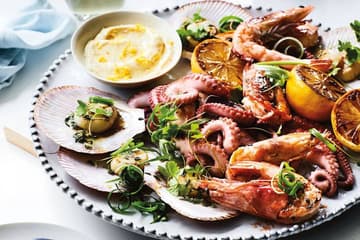
Seafood can be a core menu ingredient, so a shortage of a particular fish, prawn or shellfish product may affect several dishes at once.
Restaurants should therefore plan their fish selection around actual menu demand while maintaining suitable alternatives where practical. Access to both fresh and frozen products can also provide additional flexibility when availability changes.
Weststate Seafoods supplies local and imported fish in fresh and frozen formats, including whole fish, fillets, frozen fish and crumbed fish products.
Different product categories require different inventory strategies.
Monitor seafood according to usage, shelf life and expected bookings. High-volume products should have clear reorder points, while slower-moving products should be purchased carefully to minimise waste.
Track freezer capacity, stock rotation and product expiry dates. Frozen products can provide useful safety stock, but excessive purchasing can still create unnecessary storage costs and tie up working capital.
Chilled products generally require more frequent checks because their shelf life is shorter. Use FIFO rotation and monitor storage conditions to ensure older stock is used first.
A practical stockout prevention system can be built around five steps:
A digital inventory system can automate parts of this process, but even a structured spreadsheet or checklist can improve stock visibility when used consistently.
Reliable supply is an important part of stockout prevention because accurate inventory planning only works when products can be replenished predictably.
Weststate Seafoods has supplied restaurants, hotels, clubs, hospitals, retailers and wholesalers since 1988. The business describes its operation as a seafood and food-service distribution service, with HACCP approval and a focus on maintaining well-stocked products, availability and fast delivery.
Weststate also provides a broader food-service range beyond seafood, covering frozen, chilled, pantry and other commercial requirements. This can help hospitality businesses consolidate their food supply needs and simplify regular purchasing.
For busy kitchens, the advantage is not simply having a supplier. It is having a supply partner that understands hospitality demand, communicates about availability, and can support changing requirements.
Safety stock should cover reasonable demand fluctuations and supplier delays without creating excessive waste. Critical, high-use products generally require a larger buffer than slow-moving items.
Set reorder points based on average usage, supplier lead time, storage capacity, and expected demand. Reorder when stock reaches that predetermined level rather than waiting until it is nearly depleted.
Use historical consumption, upcoming bookings, shelf life, and storage capacity to determine order quantities. Review slow-moving products regularly and adjust minimum stock levels when purchasing patterns change.
Monitor high-use, highly perishable, expensive, and menu-critical products most closely. Seafood, chilled products, meat, cooking oils and popular frozen items are common priorities.
Review bookings, promotions, public holidays and historical sales before increasing stock levels. Place orders early enough to account for supplier lead times and maintain additional safety stock for critical ingredients.
Contact the supplier immediately, check for an approved alternative, and assess whether an existing menu item can be substituted without compromising quality. A supplier with a broad product range may also be able to recommend suitable alternatives.
Yes. Weststate supplies fresh and frozen seafood to restaurants, cafés and hospitality businesses across Western Australia, including fish, prawns, shellfish and other seafood categories.
Yes. Weststate provides a wider food-service range covering frozen, chilled and pantry products, allowing hospitality businesses to source more of their regular requirements through one supplier.


If you are looking to buy fresh or frozen seafood of the highest quality, a great food service range including some of the most well-known brands in the hospitality industry, then Weststate Seafoods is the company for you.
12A Coolibah Way, Bibra Lake, WA 6163, Australia
© WestState Seafood 2026 | Privacy Policy | Site by c4 Digital Agency