
- Food Service and Seafood Wholesale Specialists
- Client Login
- 61 8 9434 1200
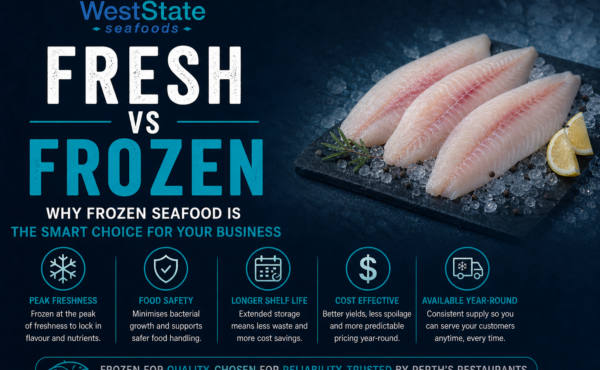
The debate around fresh vs frozen seafood is one that every commercial kitchen in Perth has an opinion on. For restaurants, cafes, hotels, pubs, hospitals, and aged care facilities, the choice is rarely black and white.
If you want to work with a reliable wholesale seafood partner who stocks both, understanding how each format performs in a high-volume kitchen is the first step to making smarter procurement decisions.
The fresh vs frozen seafood conversation is not about which is better in absolute terms. It is about which is right for a given dish, service model, and budget.
Most professional kitchens in Perth rely on both formats, using fresh product for premium menu items and frozen for bulk applications, consistent yield, and menu continuity.
At the same time, advances in commercial freezing technology mean that frozen seafood, when handled correctly, can deliver quality that rivals fresh in many applications. Understanding when to use each is a core procurement skill.
The key drivers behind this dual approach include:
Frozen seafood is the backbone of consistent, scalable restaurant food service. For high-volume operations including clubs, hospital kitchens, aged care facilities, and fast-casual restaurants, frozen product delivers a reliable yield, predictable pricing, and a dramatically reduced waste rate.
Modern individual quick freeze (IQF) and blast freeze technology has transformed the quality ceiling for frozen seafood.
When fish is frozen at sea immediately after harvest, the cellular structure is preserved in a way that delivers excellent texture and flavour on the plate.
High-quality options like those in the Starfish brand offer quality guarantees to provide peace of mind when providing frozen seafood.
The fresh fish vs frozen debate often overlooks the reality that at-sea frozen product can be superior to fresh product that has spent several days in transit.
Frozen seafood is the smart choice in these operational contexts:
The operational case for frozen seafood in a commercial kitchen is strong:
For Perth restaurants serving large tables, set menus, or function bookings, the ability to hold frozen stock and thaw to order is a significant operational advantage over dependence on daily fresh supply.
Fresh seafood remains the benchmark for premium plate presentation and raw texture. For high-end dining, sashimi preparation, and whole-fish service, fresh product is generally non-negotiable.
Perth gives restaurants access to daily landings of species including Snapper, Red Emperor and Barramundi.
However, fresh products carry specific demands. It requires tighter cold chain management, shorter holding windows, and closer coordination with your supplier around delivery timing.
For busy services, the window between optimal freshness and unsafe product can be narrow.
Fresh seafood delivers its greatest value in specific contexts:
Fresh seafood also supports a compelling menu story. Restaurants that feature the catch of the day or name the fishery of origin build credibility with informed diners and justify a higher price point.
For hotels and high-end pubs, this narrative adds perceived value to the dining experience.
The fresh fish vs frozen choice ultimately comes down to the application, not the format. Here is how experienced Perth operators typically think about it:
The fresh vs frozen seafood question should also factor in your storage infrastructure.
Restaurants with limited refrigeration space often find that a frozen-forward procurement model is more practical, freeing up chilled space for high-turnover fresh product and prepared ingredients.
Most successful Perth kitchens operate a hybrid model. They establish a weekly fresh order for their premium menu species and maintain a frozen inventory for bulk applications and backup supply.
This approach gives chefs the quality they need for signature dishes while protecting the kitchen from supply gaps. Practical approaches to managing fresh fish vs frozen in daily operations include:
Use this guide to make the right call for each line on your menu:
Whether you lean fresh or frozen, these practices will strengthen your seafood supply chain:
Proper storage is where the fresh vs frozen seafood quality gap is either maintained or lost. Mishandling fresh product shortens its usable life dramatically, while incorrect frozen storage causes freezer burn, textural degradation, and off-flavours.
For the full range of fresh and frozen fish options to perform at their best in your kitchen, follow these handling protocols:
For aged care and hospital kitchens, these protocols should be documented and included in your food safety management plan, with regular monitoring records maintained for audit compliance.
Frozen seafood generally delivers better and more predictable profit margins in high-volume operations due to its lower wastage rate, consistent portion yield, and more stable pricing.
Fresh seafood can generate higher margins on premium menu items where the selling price reflects the quality premium, but it carries greater waste risk and price volatility.
Most profitable kitchens use a combination, reserving fresh for high-margin features and frozen for volume-driven menu items.
Yes, significantly. Frozen seafood extends your procurement window from days to weeks, reducing the frequency of urgent orders and allowing more systematic stock management.
IQF formats let you thaw exactly what you need per service, eliminating the all-or-nothing dynamic of fresh product that must be used quickly once received.
For kitchens with variable covers or fluctuating function bookings, a frozen-forward inventory model provides considerably more operational flexibility.
The decision should be driven by dish type, service model, storage capacity, and price point.
Fresh seafood belongs on menus where texture, presentation, and provenance storytelling justify a premium.
Frozen seafood belongs wherever volume, consistency, and cost control are the primary drivers. In practice, the fresh fish vs frozen choice should be made species by species and dish by dish rather than as a blanket policy.
Consult with your supplier about which species are genuinely superior in frozen format and which benefit most from being sourced fresh.
Seafood supply directly affects food cost percentage, waste rate, labour efficiency, and menu consistency.
A reliable supply relationship with a supplier who can provide both fresh and frozen products on a consistent schedule reduces emergency purchasing, last-minute menu changes, and the staff time spent managing supply problems.
Restaurants that invest in a structured supply relationship with wholesale partners typically see measurable improvements in food cost control, reduced waste, and better kitchen morale because the team is not fighting supply fires during service.


If you are looking to buy fresh or frozen seafood of the highest quality, a great food service range including some of the most well-known brands in the hospitality industry, then Weststate Seafoods is the company for you.
12A Coolibah Way, Bibra Lake, WA 6163, Australia
© WestState Seafood 2026 | Privacy Policy | Site by c4 Digital Agency